CS2 roles explained: entry, AWPer, support, lurker, anchor and IGL
Every Counter-Strike 2 role on T side and CT side, what each player actually does, and how to spot someone's role from their FACEIT stats.
Free · Chrome, Opera, GX, Edge, Brave
A CS2 team isn’t five players doing the same job. Every round works better when each player knows their role, and when you know your opponents’ roles you know where they’ll be. Here’s what each one means.
T side roles
- Entry fragger. First through the door. Their job is to take the opening duel and make space, even if they die doing it. A good entry dies in a way that their teammate can trade.
- Second entry / trade player. Right behind the entry. If the entry dies, they kill the enemy who shot first.
- Support. Throws the smokes, flashes and molotovs that make the site take possible. Fewer kills, a lot of impact.
- Lurker. Plays alone on the other side of the map. They gather information, cut off rotations and catch defenders from behind.
- AWPer. Takes the long, early picks that make a round 5 v 4 before anyone touches the site.
CT side roles
- Anchor. Holds a bombsite alone or with one teammate, and stays alive until help arrives. Anchors win a lot of clutches.
- Rotator. Plays between sites and moves to wherever the attack goes.
- Aggressive CT. Pushes out early to take map control or pick off a lurker.
- Support. Spends utility to slow down a site take and keep teammates alive.
- AWPer. Holds the long angle that the attackers have to cross.
The IGL
The in-game leader calls the strategy: which site to hit, when to save, and how to adapt mid-round. In a FACEIT pug the IGL is often just whoever speaks first. Any role can call, but support and lurk players usually have the most time to think.
How to spot a role from stats
You can read a player’s role from a few numbers:
- Share of kills with a sniper. Around 15% or more and they’re almost certainly the AWPer.
- Entry rate, meaning how often they take the first duel of the round. High means entry. Low means support or lurk.
- Utility numbers, such as enemies flashed and utility damage per round. High means support.
- Clutch win rates. Strong 1v1 and 1v2 numbers point to an anchor or a lurker.
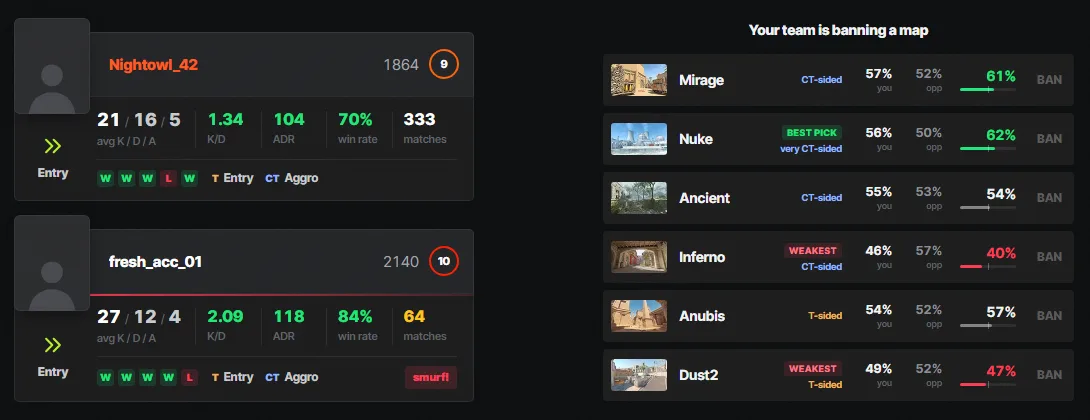
Prefire does this automatically for every player in your FACEIT match room. Each card shows a main role (AWPer, Entry, Support or Rifler) and a suggested T side and CT side role, like Lurk / Anchor. Hover it to see the stats behind the guess.
Which role should you play?
Play to your numbers, not your favourite pro. If you win first duels, entry. If you live long and win clutches, anchor or lurk. If your team keeps losing site takes, be the one who buys utility.
Next: FACEIT stats explained, to understand the numbers behind each role.